
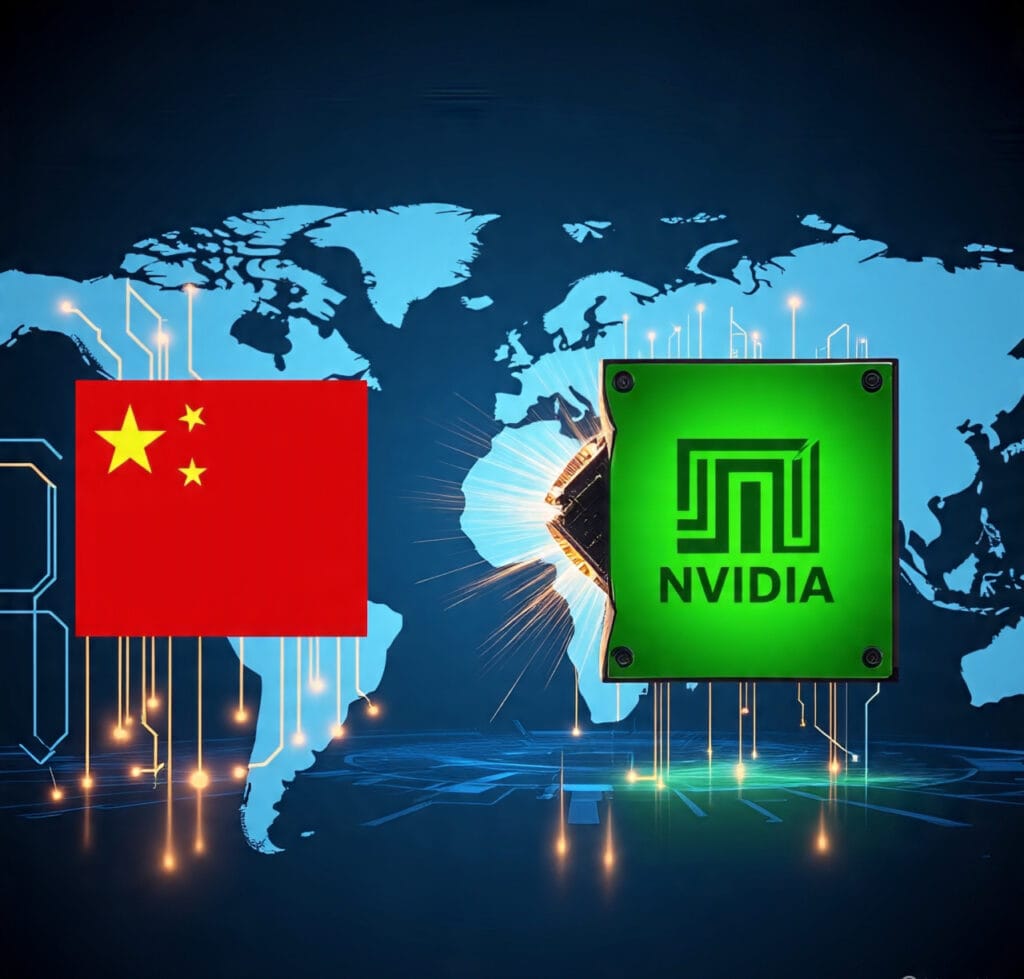
Why China Blocked NVIDIA Chips—The Hidden Reasons Exposed
China’s decision to block NVIDIA chips has created waves across the global technology and artificial intelligence industries. At first glance, it may seem like just another move in the ongoing trade and technology rivalry between the United States and China. However, the reality is far deeper, with multiple layers of economic, political, and technological motivations hidden beneath the surface. To truly understand why China made this bold move, it is important to look at the background of NVIDIA’s dominance, China’s own ambitions, and the silent war being fought for control of the future of artificial intelligence and computing power.
NVIDIA has long been recognized as the world’s leading developer of GPUs, or graphics processing units. While these chips were originally designed for rendering graphics in gaming, they have become the backbone of artificial intelligence, high-performance computing, and advanced research. From training large AI models to powering supercomputers, NVIDIA’s chips are in high demand everywhere. Companies like OpenAI, Google, and Meta rely heavily on NVIDIA GPUs to run their AI models, while governments see them as strategic assets for defense, cybersecurity, and technological leadership. In this context, it is clear that whoever controls access to NVIDIA’s chips holds a significant advantage in the global race for artificial intelligence supremacy.
For China, the stakes are particularly high. Over the past decade, Beijing has poured billions of dollars into building its domestic AI ecosystem. Initiatives such as “Made in China 2025” and the national AI strategy have set ambitious targets for the country to become the world leader in artificial intelligence by the middle of this century. Chinese companies like Baidu, Tencent, Huawei, and SenseTime are pushing boundaries in facial recognition, natural language processing, autonomous driving, and smart city solutions. However, one major weakness continues to hold China back: dependence on foreign-made semiconductors, particularly advanced GPUs from NVIDIA.
The decision to block NVIDIA chips is not just about reducing dependency but also about asserting technological sovereignty. In the modern digital era, semiconductors are as important as oil was in the last century. They are the fuel of innovation, and whoever controls them controls the future. China understands this better than anyone else. By restricting NVIDIA’s entry into its domestic market, China is essentially forcing its tech companies and researchers to turn toward homegrown solutions. It is a painful step in the short term, but a necessary one if the country wants to achieve long-term independence from U.S. technology.
Another hidden reason behind the ban is national security. With rising tensions between the United States and China, particularly around trade, cybersecurity, and military applications of AI, China views dependence on U.S.-made chips as a strategic vulnerability. NVIDIA chips are not just used for commercial applications but also for sensitive areas such as defense simulations, surveillance, and advanced weapon systems. By continuing to rely on NVIDIA, China risks exposing itself to potential backdoors, surveillance, or even supply cutoffs if political relations deteriorate further. Blocking NVIDIA is, therefore, a preemptive move to safeguard critical infrastructure from external influence.
This step also has a geopolitical dimension. The United States has already placed restrictions on the export of advanced chips and semiconductor technologies to China, fearing that they could be used for military purposes. By blocking NVIDIA, China is sending a clear message that it will not remain passive. Instead, it is willing to retaliate and push back against what it perceives as technological containment. The ban can thus be seen as part of a larger tug-of-war between the world’s two biggest economies, where semiconductors are now weapons of influence and control.
Economically, the decision to block NVIDIA also creates opportunities for China’s domestic chipmakers. Companies like Huawei’s HiSilicon and Semiconductor Manufacturing International Corporation (SMIC) have been investing heavily in developing GPUs and AI processors. However, they face immense challenges due to a lack of access to advanced manufacturing equipment like EUV lithography machines. By cutting off NVIDIA’s dominance in the local market, the government is creating a protected space where domestic players can experiment, innovate, and eventually catch up. In the short term, this will slow down progress for Chinese AI companies, but in the long run, it could accelerate self-reliance and help establish local champions who can compete globally.
The hidden strategy here is not simply about reacting to U.S. sanctions but about reshaping the global semiconductor supply chain. China has long been the world’s manufacturing hub for electronics, but it has remained heavily dependent on foreign chip designs. By blocking NVIDIA, the country is signaling a shift from being a consumer of technology to being a producer. If successful, this move could reshape global supply chains and reduce U.S. dominance in the semiconductor space.
There is also a psychological and symbolic angle to this decision. For years, China has been portrayed as chasing Western innovation rather than leading it. By boldly cutting off one of the most critical Western technologies, Beijing is making a statement that it no longer wishes to play the role of follower. It wants to establish its own path, even if that means short-term struggles and slower AI development. This sends a message not only to the United States but also to Chinese entrepreneurs, researchers, and citizens: the future of Chinese technology will be built on Chinese innovation.
Of course, the ban is not without risks. Many Chinese AI startups and universities rely heavily on NVIDIA GPUs for their research. Training large-scale models requires immense computing power, and alternatives are still limited. While domestic solutions are improving, they are not yet at the same level of efficiency and scalability as NVIDIA’s cutting-edge chips. This could slow down the pace of AI breakthroughs in China, at least in the near future. However, Beijing appears willing to accept this sacrifice in exchange for the long-term goal of independence and security.
For global markets, the ban has created uncertainty. NVIDIA is one of the world’s most valuable semiconductor companies, and China has been one of its biggest customers. Losing access to such a large market could affect NVIDIA’s growth and earnings while also disrupting supply chains for companies that rely on Chinese manufacturing. Investors are watching closely, as this decision could mark the beginning of a broader decoupling between Western and Chinese technology ecosystems.
Looking deeper, it becomes clear that the hidden reasons for the ban are rooted in a combination of economic strategy, political calculation, and long-term vision. China knows that artificial intelligence will define the future of global power. From defense to healthcare, from finance to urban development, AI will determine which countries lead and which fall behind. By blocking NVIDIA, China is not just responding to U.S. pressure; it is making a bet on itself. It is believed that with enough investment, talent, and determination, it can build its own semiconductor industry capable of rivaling the West.
In conclusion, China’s decision to block NVIDIA chips cannot be understood in isolation. It is part of a larger narrative of technological rivalry, national security, and economic independence. The move exposes the hidden realities of a world where semiconductors have become tools of geopolitical strategy. While the short-term consequences may be painful for Chinese companies and global markets, the long-term implications are profound. This is not just about one company or one country. It is about the future of global technology and who gets to control it. NVIDIA may have been blocked today, but the battle for AI dominance is far from over, and China has made it clear that it intends to fight on its own terms.
https://www.ft.com/content/12adf92d-3e34-428a-8d61-c9169511915c?utm_source=chatgpt.com