Some lives are defined by a single, towering achievement. Others are shaped by an unbreakable spirit forged in unimaginable adversity. The life of Professor Hans Georg Dehmelt, who passed away in 2017 at the age of 94, was a profound fusion of both.
To the world, he was a brilliant physicist, a Nobel Laureate who performed what seemed like magic: he isolated a single, solitary electron, caging it for observation in a device of his own creation. But long before he peered into the heart of matter, a young Hans Dehmelt was fighting a very different battle—not in a laboratory, but in the frozen trenches of the Battle of the Bulge, as a conscript in the German army. His subsequent capture and time as a Prisoner of War (POW) in France could have ended his story. Instead, it became the crucible that forged one of the 20th century’s most determined and ingenious scientific minds.
This is not just the story of a man who won science’s highest honor. It is the story of a remarkable journey—from the darkness of a POW camp to the luminous forefront of human knowledge, a journey fueled by resilience, curiosity, and an unwavering will to understand the universe’s most fundamental secrets.
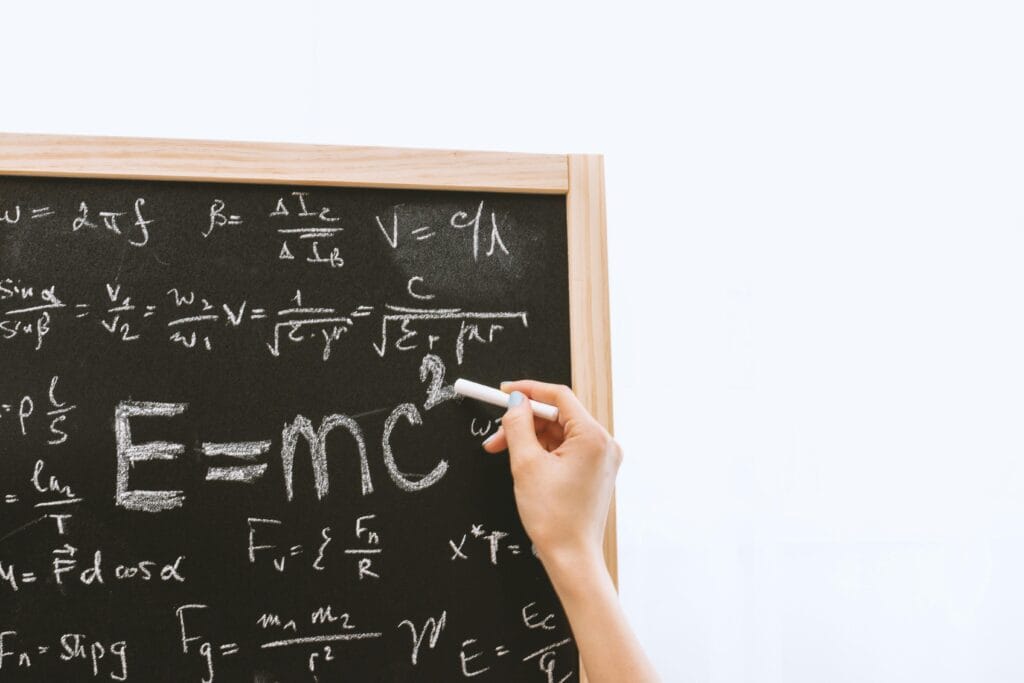
Photo by Jeswin Thomas: https://www.pexels.com/photo/person-writing-on-white-board-3781338/
The Forging of a Spirit: From War to Captivity
Hans Dehmelt’s story begins not at a laboratory bench, but amidst the chaos of a world at war. Born in 1922 in Görlitz, Germany, his early fascination with radios and electronics was a quiet constant in a turbulent childhood. This youthful passion for how things work was brutally interrupted when he was drafted into the German army in 1943.
By December 1944, he found himself in the Ardennes Forest, thrust into one of the war’s most brutal conflicts: the Battle of the Bulge. The experience was short-lived. Within weeks, he was captured by American forces and spent the next two years in a POW camp in France.
For many, this period would be a lost time, defined by hardship and deprivation. For Dehmelt, it became an unexpected university of the mind. With little else to do, he threw himself into learning. Using old textbooks sent by relatives and leveraging the knowledge of fellow educated prisoners, he taught himself advanced mathematics and physics. In the stark stillness of captivity, far from the sounds of artillery, his childhood curiosity was rekindled and focused with a new intensity. He later reflected that this time allowed him to build a powerful foundation of knowledge, free from distraction. It was here that a soldier began his transformation into a scientist.
Building a New Life: The Academic Ascent
After his release in 1946, Dehmelt returned to a shattered Germany. Undeterred, he pursued his newfound passion with the same determination that had seen him through the war years. He enrolled at the University of Göttingen, a center for the exciting new world of physics that was emerging in the post-war era.
He earned his doctorate in 1950 and, like many brilliant European scientists of his generation, soon set his sights on the United States. In 1952, he arrived at Duke University as a postdoctoral fellow. Just a few years later, in 1955, he made the move that would define his career, joining the University of Washington in Seattle. He would remain there for the rest of his life, building a legacy that would forever change the field of physics.
The Impossible Dream: Catching a Single Electron
When Dehmelt began his work, the subatomic world was understood through statistics and probabilities. Scientists studied the behavior of particles in large, chaotic crowds. The idea of isolating a single, fundamental particle like an electron—a tiny, negatively charged entity with a mass so small it was almost nothing—was considered pure fantasy. It was like trying to isolate a single drop of water in a raging hurricane.
But Dehmelt, the quiet man with a stubborn streak honed in a POW camp, saw it as the ultimate challenge. He was driven by a simple, profound question: if you could ever hold one electron still, what could you learn about it?
His answer was the Penning Trap, a device of breathtaking elegance and ingenuity. Imagine a tiny, invisible cage built not from bars, but from magnetic and electric fields. Dehmelt’s trap used a powerful magnet and precisely tuned electric fields to suspend a single electron in a perfect vacuum, effectively stopping it in mid-air. For the first time in history, a scientist could hold a fundamental particle of nature captive and study it for extended periods.
The world took notice when, in 1973, Dehmelt and his team made a monumental announcement: they had successfully isolated a single electron. The scientific community was astounded. It was a triumph of experimental physics, a feat of patience and precision that seemed to border on the impossible.
The Crown Jewel: A Nobel Prize and Lasting Legacy
Dehmelt’s work did not stop there. His “single-electron holding technique” opened up entirely new avenues of exploration. Most famously, he and his team used the trap to make the most precise measurements ever of certain electron properties, testing the very foundations of quantum theory.
His method became a cornerstone of modern physics. The principles of the ion trap are now fundamental to technologies like:
- Atomic Clocks: The world’s most precise timekeeping devices, which are vital for GPS systems and global communications networks.
- Quantum Computing: Trapped ions are a leading platform for building quantum computers.
- Mass Spectrometry: Advanced tools used in chemistry, medicine, and security to identify substances.
In 1989, Hans Dehmelt’s journey from the forests of the Ardennes to the frontiers of science reached its apex. He was awarded the Nobel Prize in Physics, sharing it with two other pioneers. The Royal Swedish Academy of Sciences hailed his work for allowing scientists to “study a single electron and a single ion with extreme precision.”
The Man Behind the Science: A Life of Curiosity and Kindness
Those who knew Hans Dehmelt at the University of Washington remember more than just his brilliant mind. He was described as humble, gentle, and deeply philosophical. He was a lover of music, often seen riding his bicycle around campus well into his later years. He never lost the wide-eyed wonder of that young boy tinkering with radios.
His past was not a subject he often dwelled on, but its lessons were ingrained in his character. He understood struggle, valued perseverance, and knew that profound breakthroughs often require immense patience. The same resilience that helped him survive a POW camp allowed him to spend decades perfecting an experiment many thought would fail.
Conclusion: A Legacy of Resilience and Precision
Hans Dehmelt’s life story is a powerful narrative in two acts. The first is a testament to the resilience of the human spirit—a story of how a young man used the bleakest of circumstances to fuel his intellect and determination.
The second act is a testament to the power of human curiosity—a story of how that same man, through sheer ingenuity and patience, taught humanity how to see the invisible, to hold the intangible, and to measure the immeasurable.
He was not just a physicist who trapped an electron. He was a pioneer who trapped possibility itself, showing us that with enough perseverance, we can isolate even the most elusive truths of our universe. His remarkable journey, from a humbled POW to a Nobel physics pioneer, remains a timeless inspiration, reminding us that the greatest discoveries often begin with the simplest question: “I wonder if it’s possible?”