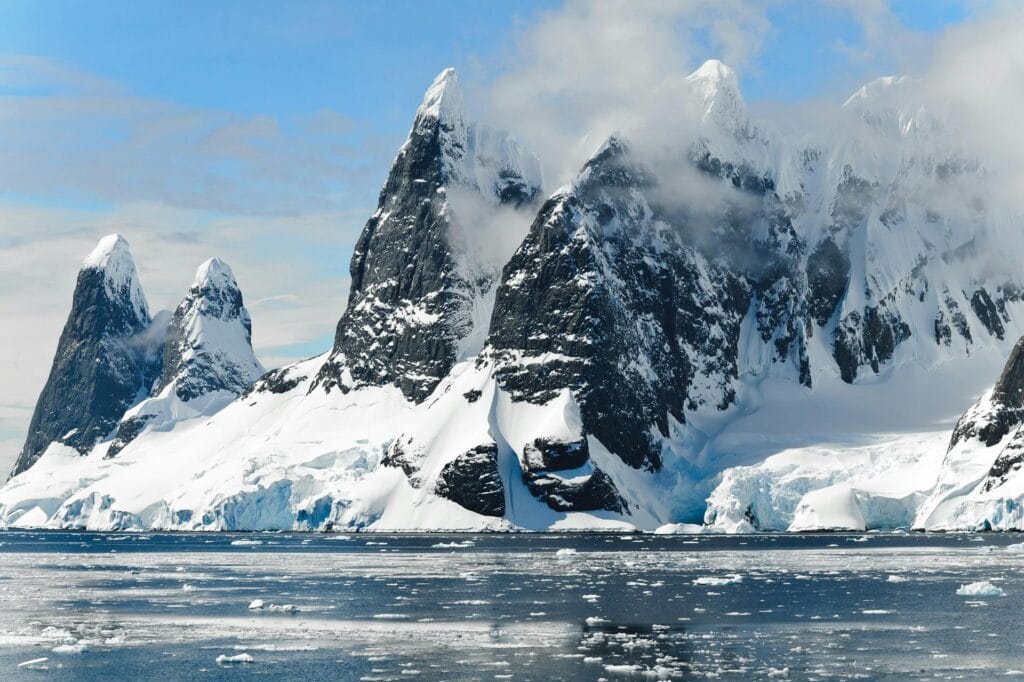
Antarctica holds a historical record. It’s not in libraries, but in ice. Layers of frozen water trap ancient air bubbles and particles. Scientists drill down to extract these ice cores. They are time capsules. Recently, researchers analyzed these cores. They found a shocking truth about plant life. Their data shows Earth’s plant growth is accelerating dramatically.
This phenomenon is called “Global Greening.” It is a direct result of human influence. But is this surge in plant life good news? The answer is surprisingly complex.
The Scientific Breakthrough: Carbonyl Sulfide
The key to this discovery is an unusual gas: Carbonyl Sulfide (COS). Everyone knows about carbon dioxide (CO₂). Plants absorb CO₂ during photosynthesis. But measuring past photosynthesis through CO₂ is difficult. It comes from too many sources.
Carbonyl Sulfide provides a clearer signal. Here’s why:
- Plants Absorb It: Plants inhale COS just like CO₂. But instead of using it, they destroy it.
- Oceans Emit It: The oceans release COS into the atmosphere.
- A Perfect Tracer: This creates a simple balance. Oceans add COS; plants remove it. Therefore, lower past levels of COS mean more plant activity.
By measuring COS in Antarctic ice, scientists built a 50,000-year history of photosynthesis. The trend was clear. For millennia, growth followed natural rhythms. Then, around 1800, the graph shot upward. Growth accelerated through the 20th and 21st centuries.
Why Is the Planet Getting Greener?
This greening isn’t random. It is a direct response to several human-driven factors.
1. Carbon Dioxide Fertilization (The Main Driver)
This is the biggest reason. Burning fossil fuels has released trillions of tons of CO₂. For plants, CO₂ is food. Higher concentrations make photosynthesis more efficient. Plants grow faster and larger. They also use water more efficiently. This “CO₂ fertilization effect” is now confirmed on a global scale.
2. Climate Change: A Mixed Bag
A warmer planet lengthens growing seasons in cold regions. Springs start earlier. Winters arrive later. This gives plants more time to grow in places like the Arctic. However, this is a double-edged sword. Other regions face extreme heat and droughts that kill plant life. The net effect is currently positive, but this balance is fragile.
3. Nitrogen Deposition: Accidental Fertilizer
Agriculture and industry release nitrogen compounds. This nitrogen falls back to earth in rain. In many forests, nitrogen is a limited nutrient. This human-made pollution acts as fertilizer, boosting growth.
4. Land Use and Reforestation
Human activity also adds green intentionally. Large-scale farming involves highly productive crops. Furthermore, major tree-planting efforts in China, India, and elsewhere contribute to the trend.
The Great Irony: Is This Good News?
More plants should be good, right? They absorb CO₂, slowing climate change. This natural carbon sink is real. It soaks up about a quarter of our emissions. But this view is dangerously simplistic.
The “Sink Saturation” Problem
Plants won’t absorb our carbon forever. Climate change creates droughts, fires, and heat stress. A stressed forest doesn’t absorb CO₂. It can burn, turning it from a carbon sink into a massive carbon source. We see this in catastrophic wildfires worldwide.
The Biodiversity Crisis
Greening does not mean diversifying. CO₂ fertilization favors aggressive species like vines and weeds. These can overwhelm slower-growing, native plants. The result is a planet that is greener but ecologically poorer. We risk losing diverse ecosystems to monocultures.
The Albedo Effect: Green Causes Warming
This is a counterintuitive risk. “Albedo” measures how much light a surface reflects. Snow and ice are bright with high albedo; they reflect sunlight, cooling the planet. Dark green forests have low albedo; they absorb heat.
As shrubs and trees spread onto the Arctic tundra, they replace reflective snow. This dark surface absorbs more heat, accelerating local warming. This can thaw permafrost, releasing huge amounts of methane—a potent greenhouse gas. In this way, greening can actually worsen global warming.
A False Sense of Security
The biggest danger may be complacency. The greening effect can be twisted into an argument that “nature will fix it.” This is a profound mistake. The greening is a symptom of the disease (high CO₂), not a cure. Relying on it ignores the underlying problem.
What Does the Future Hold?
The ice core data is clear: humans have made the planet greener. But this is a sign of imbalance, not health. Our path forward must be smart and deliberate.
- Cut Emissions First: The top priority remains reducing greenhouse gas emissions. The greening effect is a temporary buffer, not a solution.
- Protect Old Ecosystems: Preserving ancient forests is more valuable than new growth. They store massive carbon and support biodiversity.
- Reforest Wisely: Planting trees is good only if done right. Projects must use native species and focus on ecological health, not just numbers.
- Keep Monitoring: Science must continue. We need satellites and ground studies to understand these complex changes.
Conclusion: A Complicated Green
Data from Antarctica confirms our impact. The Earth is getting greener. Plants are growing faster, fed by our pollution. But this is not a victory.
It is a sugar rush for the planet—a rapid, unstable growth spurt with severe side effects. It hides a reality of biodiversity loss and future climate risks.
The message from the ice is undeniable. The planet is responding to our actions. But it is not saving us. That responsibility is ours alone.