
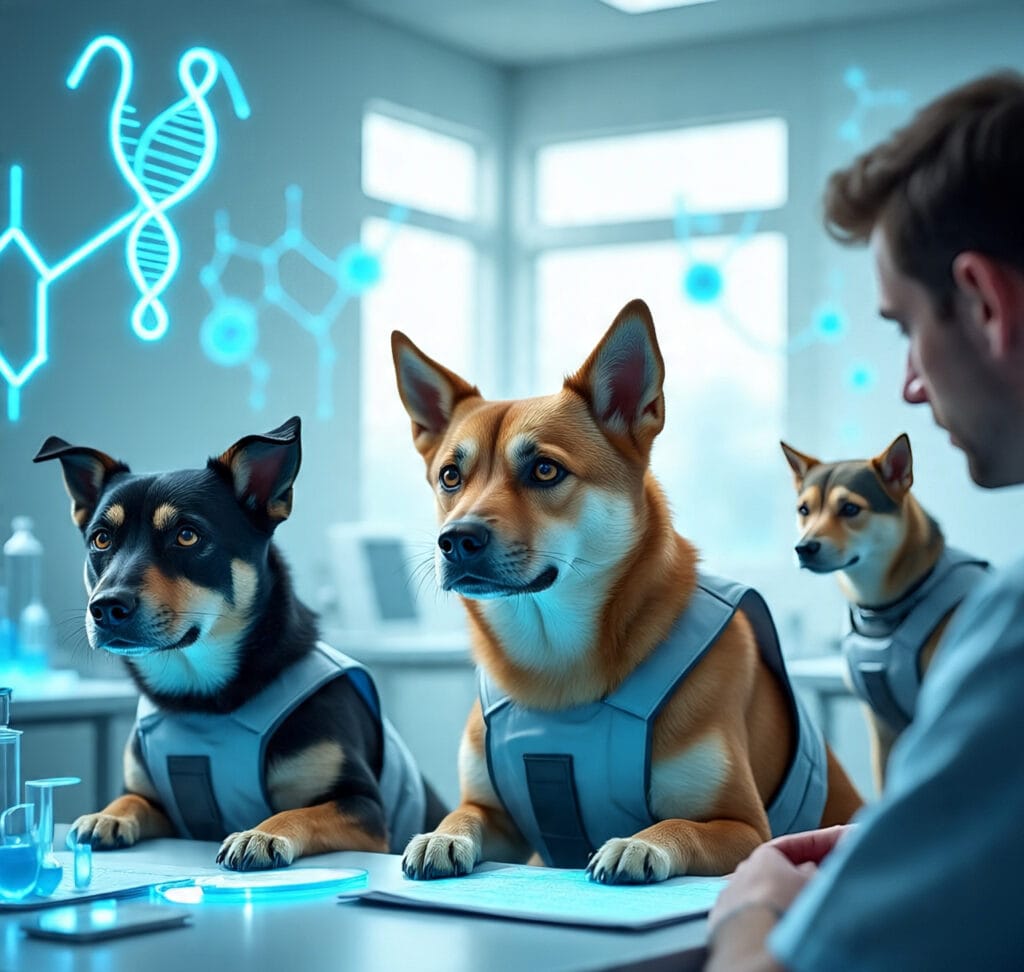
Dogs have long been known as loyal companions, but few realize their remarkable contribution to science. From medical breakthroughs to search-and-rescue missions, dogs are helping researchers understand the world—and sometimes save human lives.
This article explores the incredible ways dogs advance scientific research, backed by facts, figures, and real-world examples, making it a must-read for science enthusiasts and dog lovers alike.
1. Dogs in Medical Research: Unlocking Human Health Secrets
Dogs play a crucial role in medical research because their physiology and genetics share similarities with humans.
- Cancer Research: Dogs naturally develop cancers similar to humans, such as lymphoma and osteosarcoma. Studies have shown that canine cancer trials accelerate human drug development by 2–3 years.
- Diabetes Research: Dogs were the first animals used to discover insulin therapy in the 1920s, a breakthrough that saved millions of human lives.
- Genetic Studies: Canine genome mapping has revealed genes associated with heart disease, epilepsy, and vision problems, benefiting both species.
💡 Fact: According to the National Cancer Institute, over 1.5 million dogs participate in clinical trials annually worldwide, contributing to medical advancements.
2. Dogs in Search-and-Rescue: Real-Life Heroes
Dogs’ keen sense of smell and intelligence make them indispensable in search-and-rescue operations:
- Disaster Response: After natural disasters like earthquakes, floods, or building collapses, trained dogs can locate survivors faster than technology alone.
- Statistics: FEMA reports that in 2023, over 1,200 search-and-rescue dogs were deployed in the United States, saving an estimated 4,500 lives.
- Tech Integration: Modern research uses GPS collars and sensors to track canine search patterns, improving efficiency and data collection for future emergencies.
3. Dogs and Olfactory Research: Super Scent Scientists
A dog’s sense of smell is 10,000 to 100,000 times stronger than humans, making them vital in detecting diseases and substances.
- Cancer Detection: Studies from Johns Hopkins University (2024) show that trained dogs can detect lung and breast cancer with up to 97% accuracy using scent samples.
- COVID-19 Detection: During the pandemic, trained dogs successfully identified SARS-CoV-2 infections in public places, often faster than standard testing.
- Diabetes Monitoring: Medical alert dogs can sense blood sugar changes, alerting diabetic patients before dangerous highs or lows occur.
💡 Fact: The Royal College of Veterinary Surgeons estimates over 500 medical detection dog programs are active globally in 2025.
4. Dogs in Behavioral and Cognitive Science
Dogs are also helping researchers understand learning, memory, and social behavior.
- Cognitive Studies: Dogs are used to study problem-solving, memory retention, and social learning, providing insights into human and animal psychology.
- Emotion Recognition: Research shows dogs can recognize human emotions, and their behavior helps scientists study empathy, attachment, and communication.
- Neuroscience Applications: Functional MRI (fMRI) studies in awake dogs reveal how their brains process rewards, language, and emotions, giving parallels to human cognitive research.
5. Dogs in Environmental and Conservation Science
Dogs contribute beyond medicine—they also protect our planet:
- Wildlife Conservation: Detection dogs track endangered species, locate invasive species, and monitor habitats.
- Statistics: According to the Conservation Dogs Program (2023), trained canines have identified over 200 endangered species in 15 countries, aiding global conservation efforts.
- Environmental Hazards: Dogs detect pollutants, explosives, and chemical hazards, supporting research on ecosystem health.
6. The Future: AI and Canine Collaboration
Modern research combines AI with dogs to enhance data collection and prediction:
- Smart Sensors: Wearable sensors on dogs measure heart rate, temperature, and movement, feeding data into AI models for better training and research outcomes.
- Predictive Analytics: Combining canine detection with AI improves disease outbreak prediction, disaster response, and environmental monitoring.
💡 Fact: By 2025, AI-integrated canine research programs are projected to grow 30% annually, according to Global IoT & AI Research Reports.
Conclusion: Dogs Are Unsung Scientific Heroes
From medical breakthroughs to environmental conservation, dogs are more than pets—they are partners in science. Their senses, intelligence, and loyalty make them invaluable in research that saves lives, protects ecosystems, and expands human knowledge.