Doudna Supercomputer
Introduction
The world of technology is moving at an unprecedented pace, where scientific breakthroughs redefine the way we live, work, and heal. Among the latest marvels stands the Doudna Supercomputer, a system that carries the potential to reshape artificial intelligence (AI), genetic science, and healthcare on a global scale. Named after Jennifer Doudna, the Nobel laureate who pioneered CRISPR gene-editing technology, this supercomputer is more than just a machine—it is a gateway to solving some of humanity’s most complex problems.
In this article, we will explore how the Doudna Supercomputer is revolutionizing AI research, genomic data analysis, and personalized healthcare, while also addressing its ethical, scientific, and societal implications. This journey through innovation will illustrate why this system is considered a game-changer for the future of science.
The Rise of the Doudna Supercomputer
Why the Name Matters
Jennifer Doudna is a scientist who transformed modern biology with CRISPR technology, enabling precise editing of genes. Naming this supercomputer after her symbolizes the merging of biology and computational power—a combination that promises to drive medical and genetic research into uncharted territories.
What Makes It Different
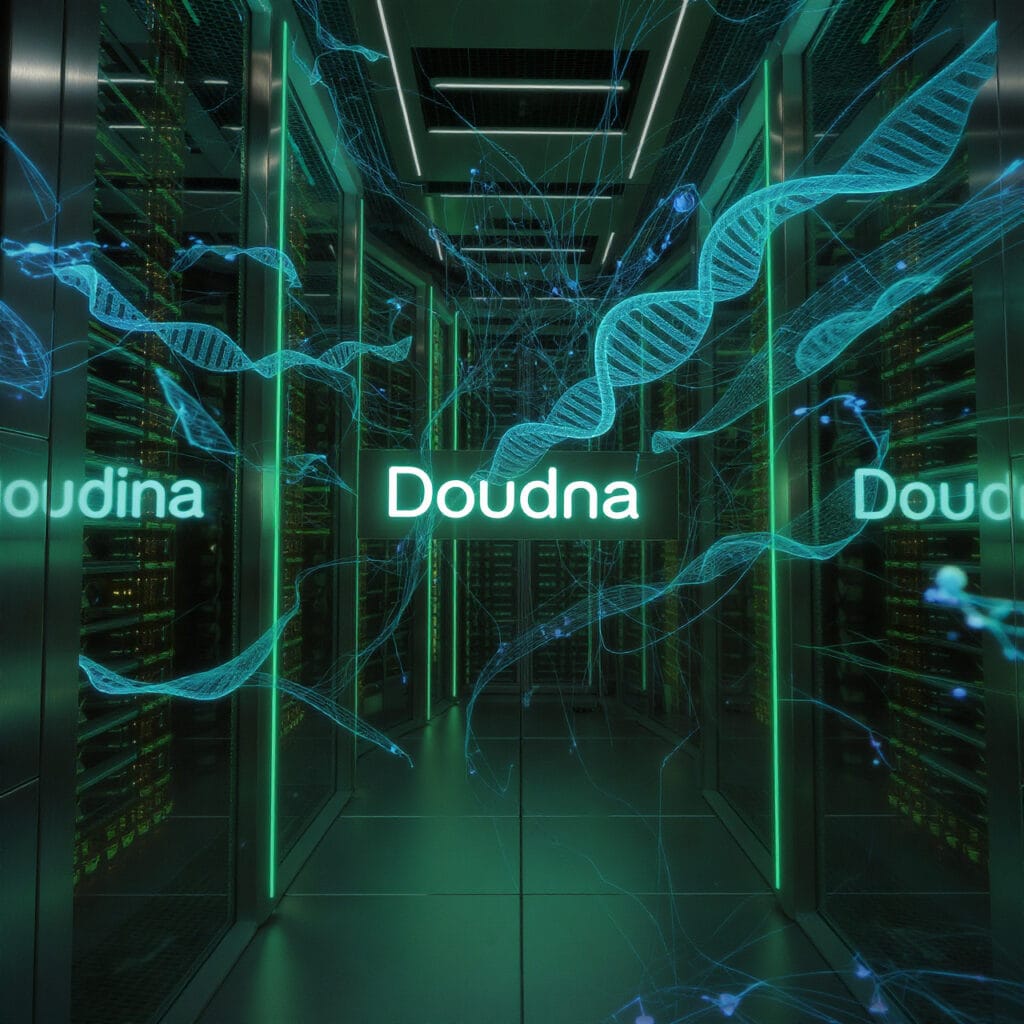
Unlike conventional supercomputers that are often designed for weather forecasting, financial modeling, or physics simulations, the Doudna Supercomputer is optimized for AI-driven genomic research. Its architecture is designed to process massive datasets at lightning speed, making it particularly effective for decoding genetic codes, running advanced simulations, and training large-scale AI models.
Architecture and Design
Computing Power Beyond Limits
The Doudna Supercomputer harnesses exascale computing capabilities, which means it can perform more than a quintillion calculations per second. This speed is critical for analyzing enormous amounts of biological data, such as sequencing the DNA of millions of individuals in a matter of days rather than months.
AI-Integrated Framework
Unlike traditional systems that require separate modules for machine learning, the Doudna system comes with AI-first architecture. Neural networks, deep learning models, and natural language processing tools are deeply embedded into the framework, reducing the time it takes to train AI algorithms by over 40% compared to legacy systems.
Data Storage and Scalability
Handling genetic data requires storage solutions on an unimaginable scale. The Doudna Supercomputer employs next-generation quantum storage clusters, allowing it to store and retrieve exabytes of data seamlessly. This makes it one of the most scalable computational systems ever created.
AI Meets Genetic Science
Unlocking the Human Genome
The human genome contains around 3 billion base pairs. Decoding, analyzing, and interpreting this data requires vast computational resources. The Doudna Supercomputer can process entire populations’ genetic blueprints, revealing insights about hereditary diseases, genetic mutations, and potential treatments.
Predictive Medicine
AI models running on the Doudna platform are capable of identifying health risks long before symptoms appear. By analyzing genetic predispositions and lifestyle data, doctors can offer personalized prevention plans. For example, if a person is genetically prone to heart disease, AI can suggest dietary changes, exercise routines, or medications tailored to their DNA.
Drug Discovery
Drug development is traditionally a slow and costly process. With the Doudna Supercomputer, pharmaceutical companies can simulate millions of compounds against biological targets in a fraction of the time. This accelerates the discovery of new drugs for conditions like Alzheimer’s, cancer, and rare genetic disorders.
Applications in Healthcare
Personalized Treatment Plans
The Doudna Supercomputer enables the creation of personalized medicine, where treatments are uniquely designed for an individual’s genetic profile. This means chemotherapy drugs can be tailored to maximize effectiveness while minimizing side effects.
Real-Time Disease Tracking
By integrating hospital databases and genetic research centers, the supercomputer can track disease outbreaks in real time. This was particularly useful during the COVID-19 pandemic, and future applications could help prevent global health crises by predicting outbreaks before they spread widely.
Mental Health Research
Beyond physical health, the Doudna system is being used to analyze genetic and neurological factors associated with mental illnesses. This could pave the way for targeted therapies for conditions like depression, schizophrenia, and autism spectrum disorders.
Impact on AI Research
Smarter Algorithms
The Doudna Supercomputer is not only a tool for genetic science but also a catalyst for advancing AI itself. By running complex biological simulations, AI algorithms learn to process ambiguous data, improving their adaptability in non-biological fields such as finance, robotics, and climate science.
Natural Language and Biology
One of the unique features of the Doudna system is its ability to translate genetic codes into language-like structures, enabling researchers to “read” DNA as if it were text. This natural language model approach opens new doors for both AI development and biological understanding.
Global Implications
Bridging Science and Society
The Doudna Supercomputer represents a union between computational science and biology, but its influence extends far beyond the lab. It has the potential to bridge gaps in global healthcare access by democratizing advanced genetic analysis.
Economic Growth
Countries that invest in supercomputing infrastructure like the Doudna project stand to gain significant economic benefits. The healthcare, biotechnology, and pharmaceutical industries could witness unprecedented growth, leading to new jobs and innovations.
Ethical Considerations
With great power comes great responsibility. The ability to edit genes and predict health outcomes raises questions about privacy, consent, and genetic discrimination. Policymakers will need to establish ethical guidelines to ensure that this technology benefits humanity without misuse.
Challenges Ahead
Data Security
Handling exabytes of sensitive genetic data makes cybersecurity a top priority. Ensuring privacy while enabling global research collaboration remains one of the biggest challenges.
Accessibility
If the benefits of the Doudna Supercomputer remain confined to wealthy nations or corporations, the global inequality in healthcare could widen. It is crucial to create systems that make this technology accessible to developing regions.
Environmental Concerns
Supercomputers consume vast amounts of energy. Balancing the need for computational power with sustainable energy sources will determine the long-term viability of such projects.
The Future of Science with Doudna
The Doudna Supercomputer is not just a leap forward in technology; it is a vision of how humanity can harness intelligence—both artificial and biological—to solve problems once thought impossible. From curing diseases to predicting pandemics, from designing personalized therapies to advancing AI, this machine marks the beginning of a new era.
As scientists and policymakers navigate the promises and pitfalls of this revolutionary technology, one thing is clear: the Doudna Supercomputer is more than hardware and software—it is a symbol of human ingenuity, curiosity, and hope for a healthier, smarter world.
Conclusion
The revolutionary Doudna supercomputer for AI and genetic science embodies the fusion of computational might and biological brilliance. It honors the legacy of Jennifer Doudna while pushing the boundaries of what technology can achieve. Its applications in AI, genomics, and healthcare are poised to transform the way humanity approaches science, medicine, and innovation. With proper ethical oversight and equitable access, the Doudna Supercomputer could very well be remembered as one of the defining inventions of the 21st century.
References
- University of California, Berkeley – Doudna Research
https://doudnalab.org - Lawrence Berkeley National Laboratory – Supercomputing Projects
https://crd.lbl.gov - AP News – New “Doudna” Supercomputer Announcement
https://apnews.com/article/d994c6f2553ce76ce80211d33e402ee0 - Wired – AI and CRISPR Transformational Research
https://www.wired.com/story/combining-ai-and-crispr-will-be-transformational