
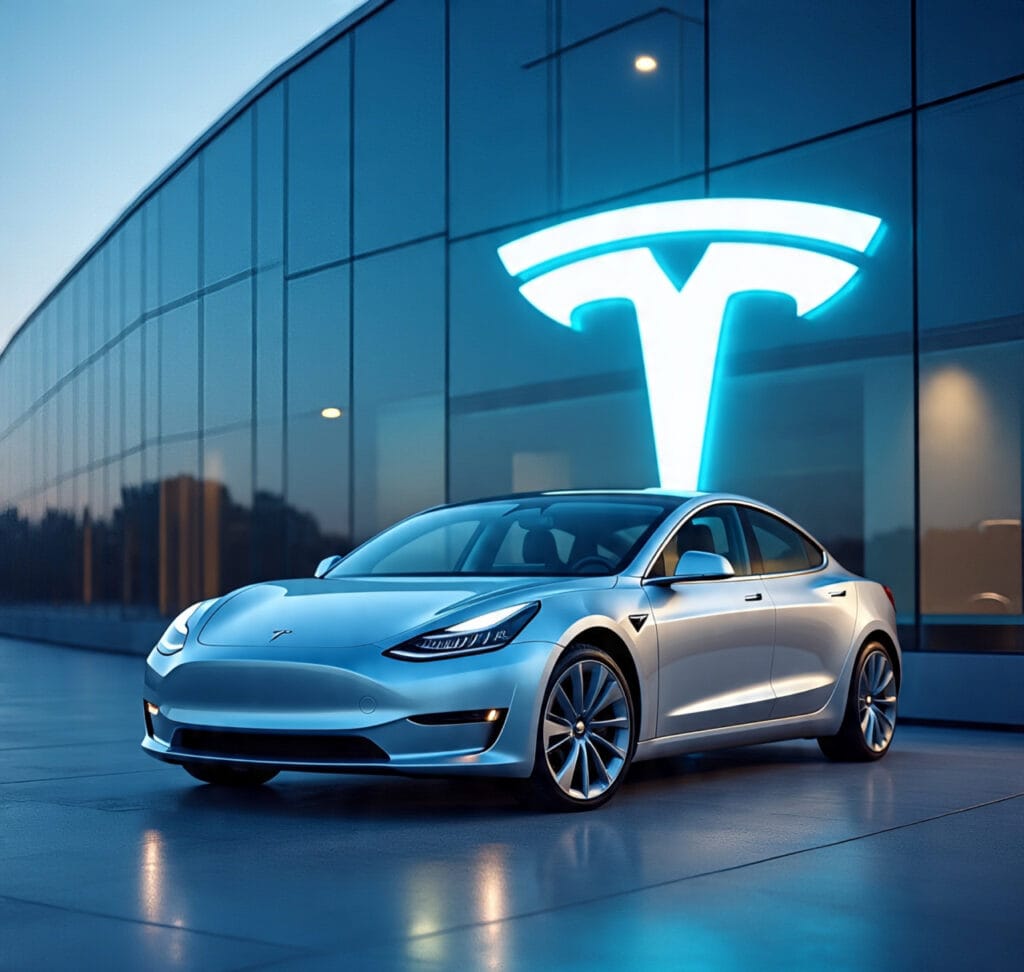
The Shocking Truth About Tesla’s
The Early Struggles and Visionary Goals
Tesla began in 2003 with a radical mission: to accelerate the world’s transition to sustainable energy. While most car manufacturers dismissed electric vehicles as impractical, Tesla proved otherwise. The first product, the Tesla Roadster, shocked the world with a 200-mile range powered by lithium-ion batteries. This single move showed that electric cars could be fast, stylish, and practical.
When Elon Musk stepped in as CEO in 2008, Tesla’s vision expanded. It wasn’t just about building cars; it was about reshaping the entire auto industry. From the beginning, Tesla stood out as more than a car company—it was a technology and innovation powerhouse.
The Power of Gigafactories and Innovation
Tesla’s rise accelerated when it introduced Gigafactories. These massive facilities redefined battery manufacturing and brought production costs down significantly. The Model S, launched in 2012, became a global icon, proving EVs could outperform traditional luxury cars.
Tesla then launched the Model 3, the company’s first affordable mass-market EV, which became one of the world’s best-selling electric vehicles. By controlling the supply chain, designing batteries in-house, and focusing on vertical integration, Tesla achieved what most automakers failed to do: scale EVs profitably.
Direct-to-Consumer Sales and Supercharger Network
Tesla disrupted industry norms by bypassing dealerships. Customers could order vehicles directly online, giving Tesla full control of pricing and the buying experience. This approach cut costs, improved customer satisfaction, and built a loyal fan base.
At the same time, Tesla created its Supercharger network—a fast-charging system across the globe that eliminated one of the biggest fears about EV ownership: range anxiety. These chargers turned long-distance EV travel from a dream into a reality.
The Role of Government Support
A less-discussed truth behind Tesla’s rise is the role of government funding. Tesla benefited from loans, tax credits, and energy grants worth billions of dollars. A $465 million loan from the U.S. Department of Energy in 2010 gave Tesla the runway it needed to scale production.
Globally, governments supported EV adoption with tax rebates and incentives, encouraging consumers to choose electric over gasoline-powered cars. This external boost, combined with Tesla’s innovation, helped it achieve mass adoption faster than anyone expected.
Tesla’s Financial Transformation
In the early years, Tesla faced financial crises and even flirted with bankruptcy. But by 2013, the company turned its first quarterly profit. Over the next decade, Tesla evolved from a struggling startup into one of the most valuable automakers in history.
The Model Y became Tesla’s crown jewel, even surpassing traditional bestsellers like the Toyota Corolla. By 2023, Tesla had achieved consistent profitability, proving skeptics wrong and rewriting automotive history.
Autopilot, Full Self-Driving, and Artificial Intelligence
Tesla wasn’t content with building electric cars—it aimed to create fully autonomous vehicles. With the release of Autopilot in 2014 and later Full Self-Driving (FSD) features, Tesla became a pioneer in autonomous technology.
Tesla’s AI-driven vision is transforming transportation. Musk’s long-term plan includes fleets of robotaxis and subscription-based FSD services that could make Tesla less of a car company and more of a mobility platform. The shocking twist is that cars may eventually become secondary to Tesla’s AI-powered software business.
The Push Into Robotics and Future Technology
Elon Musk has made it clear that Tesla’s future isn’t limited to cars. The development of the Optimus humanoid robot signals Tesla’s ambition to lead in robotics and AI. Musk predicts that humanoid robots and robotaxis could eventually make up the majority of Tesla’s value.
Tesla is also investing in energy solutions such as solar power and Powerwall home batteries, reinforcing its identity as a sustainable energy company rather than just an automaker.
Global Market Dominance and Competition
Tesla remains the benchmark for EV success, but competitors like BYD in China and Volkswagen in Europe are catching up. Tesla still dominates the U.S. EV market and maintains a strong global presence, but the landscape is evolving quickly.
Despite increasing competition, Tesla’s brand loyalty, software advantage, and global Supercharger network give it a unique edge. Customers don’t just buy a Tesla; they join a movement for innovation and sustainability.
Challenges and Controversies
Tesla’s rise has not been free of controversy. From production delays and “production hell” to criticisms over Autopilot safety, Tesla has faced tough scrutiny. Elon Musk’s outspoken personality also adds fuel to debates around Tesla.
However, these challenges often turn into opportunities. Production setbacks forced Tesla to innovate in manufacturing, and safety debates pushed them to refine autonomous features even further. In every challenge, Tesla found a way to turn pressure into progress.
The Shocking Truth Behind Tesla’s Rise
The real shocking truth is that Tesla’s rise wasn’t only about cars. It was about a radical vision, billions in government backing, daring risks, vertical integration, and a relentless push into the future of AI and robotics.
Tesla is not simply a car company—it is a tech giant disguised as an automaker. While most companies think in terms of quarters, Tesla thinks in terms of decades. Its story is not just about survival or success but about reshaping human mobility and energy forever.
Final Thoughts
Tesla’s rise shocked the world because no one expected a small electric car startup to become a trillion-dollar disruptor. The company overcame bankruptcy, defeated skeptics, and redefined the auto industry and is now pushing into robotics, AI, and energy.
The shocking truth is that Tesla’s greatest achievements may still lie ahead. As the world shifts toward clean energy, automation, and intelligent machines, Tesla stands at the center of it all.